Few desert creatures evoke a stronger reaction than the Giant Desert Centipede (Scolopendra heros, also known as the Texas Giant Centipede or Giant Redheaded Centipede). Reaching lengths of 6 to 8 inches (and occasionally up to 10 inches), these massive, multi-legged arthropods are native predators throughout the Chihuahuan Desert around El Paso.
When heavy summer rain or extreme heat drives them from rock walls into residential living rooms and garages, understanding their behavior and risks is essential.
1. Appearance & Biology
The Giant Desert Centipede is easily distinguished by its vibrant, high-contrast coloration:
- Body: Jet black or dark brown segmented body.
- Head & Tail: Bright fiery orange or red head and rear legs (aposematic coloring warning predators of its venom).
- Legs: Bright yellow to yellowish-orange legs (usually 21 pairs).
- Mouthparts: Modified front legs called forcipules (poison claws) that deliver venom into prey.
2. Are Giant Desert Centipedes Dangerous?
Centipedes are active nocturnal hunters that feed on crickets, moths, beetles, lizards, and small mice.
The Bite Experience
While their bite is rarely fatal to healthy humans, it is intensely painful, frequently compared to the pain of a wasp sting combined with blunt trauma:
- Immediate Symptoms: Sharp, burning pain, localized swelling, redness, and throbbing that can last from several hours to several days.
- Medical Attention: Anyone who experiences severe allergic reactions, nausea, dizziness, or difficulty breathing should seek immediate emergency medical care.
3. Why Do They Come Indoors in El Paso?
Centipedes require cool, humid micro-climates to keep their exoskeletons from drying out:
- Rock Wall Voids: The mortar joints and rock cavities of traditional El Paso rock landscaping provide natural daytime harborage.
- Moisture Seeking: During hot dry spells or right after torrential monsoon rains, centipedes follow plumbing lines, basement cracks, and door thresholds indoors.
- Hunting Prey: If your garage has crickets or roaches, centipedes will follow their prey inside.
4. How to Keep Centipedes Out
- Eliminate Moisture Around Foundations: Ensure sprinkler heads do not spray directly against stucco or slab edges.
- Seal Foundation Gaps & Thresholds: Install heavy-duty weatherstripping and door sweeps on garage and exterior doors.
- Maintain a 2-Foot Gravel Barrier: Clear leaves, mulch, and decaying debris away from foundation walls.
- Apply a Microencapsulated Perimeter Barrier: Professional pest control applications around perimeter rock walls and foundation boundaries create an active barrier that centipedes cannot cross.
Don't let giant multi-legged desert pests roam your home. Call Pest Control El Paso at (915) 546-5672 for fast, guaranteed desert pest control.
Need Immediate Help With This Pest in El Paso?
Call (915) 546-5672 for a free inspection and a desert-tested treatment plan from local El Paso exterminators.
Keep Reading
More El Paso Pest Control Guides
Local, desert-tested advice from our El Paso exterminators.
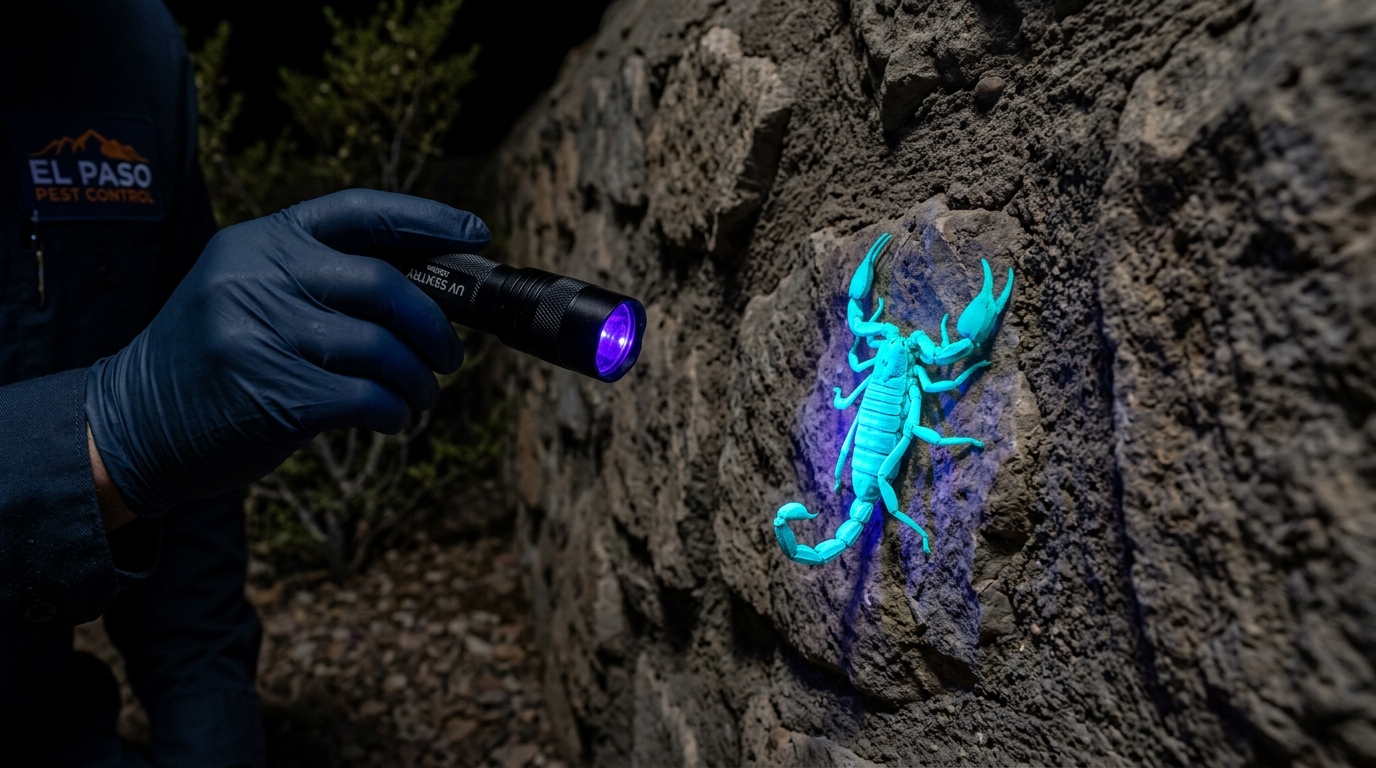
Why Bark Scorpions End Up in El Paso Bathrooms (And How to Stop Them)
Discover why bark scorpions love El Paso bathrooms, how they enter through plumbing voids, and the exact steps to scorpion-proof your home.
Read guide
German vs. American Cockroaches in El Paso: Identification & Eradication
Learn how to tell German cockroaches apart from American roaches in El Paso, where each species hides, and the right treatment methods for eradication.
Read guide
Desert Pack Rats & Mice: Preventing Winter Rodent Invasions in El Paso
Why desert pack rats and house mice move into El Paso attics and garages every fall and winter, and how exclusion sealing protects your property.
Read guide