Along the Texas-Mexico border, kissing bugs (Triatominae, also called conenose bugs or assassin bugs) represent a unique desert pest issue. In El Paso, Horizon City, and surrounding rural foothills, kissing bugs emerge during warm summer nights, attracted to exterior porch lights and carbon dioxide from sleeping humans and pets.
Because a significant percentage of native kissing bugs in West Texas carry the parasite Trypanosoma cruzi, the cause of Chagas disease, understanding how to identify and prevent these insects is crucial for family and pet safety.
1. What Does a Kissing Bug Look Like?
It is common to confuse kissing bugs with harmless boxelder bugs, leaf-footed bugs, or wheel bugs. Key identification markers include:
- Size: Approximately 0.75 to 1.25 inches long.
- Head & Mouth: Slender, cone-shaped head with a straight, elongated proboscis (straw-like mouthpart) folded under the body.
- Color & Border Markings: Dark brown or black body with distinctive orange, red, or yellow diagonal stripes or spots along the outer flared edges of the abdomen (connexivum).
- Legs: Thin, uniform legs without enlarged "leaf-like" pads (which differentiates them from leaf-footed bugs).
2. Why Are They Called Kissing Bugs?
Kissing bugs are nocturnal blood-feeders. They are drawn to the carbon dioxide exhaled by sleeping animals and humans, often biting near the mouth, eyes, or soft facial tissue while the victim sleeps.
The bite itself is generally painless. However, infection occurs not through the bug's saliva, but when the insect defecates near the bite wound, and the parasite is inadvertently scratched into the broken skin or rubbed into the eyes.
Risks for Dogs & Pets
Canine Chagas disease is a growing concern in the Borderland. Dogs frequently eat kissing bugs or get bitten in outdoor dog runs, leading to chronic heart enlargement and sudden cardiac failure.
3. How to Prevent Kissing Bugs Around Desert Properties
- Turn Off or Change Exterior Lighting: Kissing bugs fly toward standard incandescent and fluorescent outdoor bulbs. Switch to yellow "bug" LEDs or motion-activated lights.
- Seal Gaps & Screen Openings: Install tight-fitting door sweeps, repair torn window screens, and caulk around AC units.
- Elevate Outdoor Dog Kennels: Keep dog beds and kennels off the bare ground, and bring pets indoors at night during summer months.
- Clear Woodpiles & Pack Rat Nests: Kissing bugs naturally breed in the nests of desert pack rats, rock piles, and chicken coops. Removing yard debris removes their local breeding zones.
- Apply a Professional Residual Perimeter: Targeted perimeter treatments around foundation walls, patios, and window frames prevent adult kissing bugs from landing and entering.
If you suspect you have found a kissing bug inside your El Paso home, do not smash it with bare hands. Trap it in a clean glass jar and call Pest Control El Paso at (915) 546-5672 for inspection and targeted exclusion.
Need Immediate Help With This Pest in El Paso?
Call (915) 546-5672 for a free inspection and a desert-tested treatment plan from local El Paso exterminators.
Keep Reading
More El Paso Pest Control Guides
Local, desert-tested advice from our El Paso exterminators.
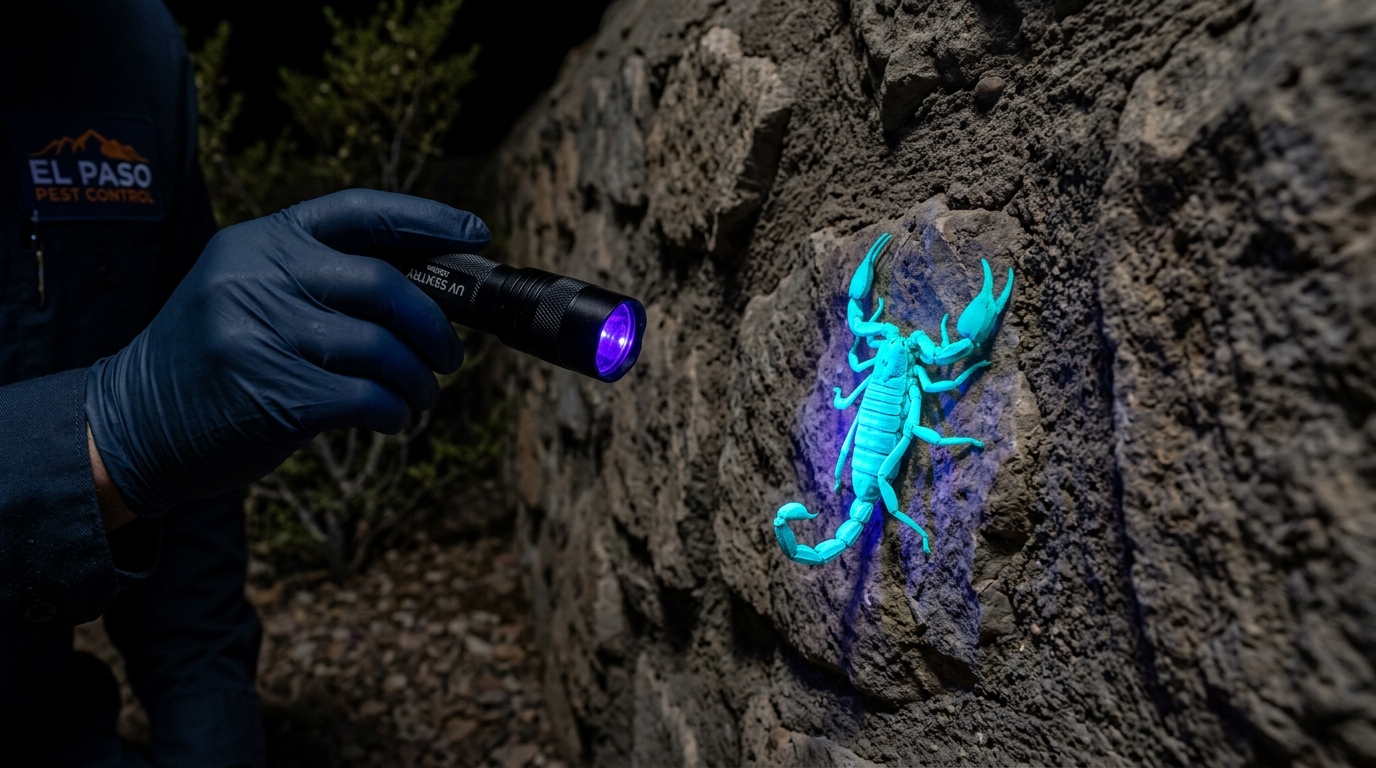
Why Bark Scorpions End Up in El Paso Bathrooms (And How to Stop Them)
Discover why bark scorpions love El Paso bathrooms, how they enter through plumbing voids, and the exact steps to scorpion-proof your home.
Read guide
German vs. American Cockroaches in El Paso: Identification & Eradication
Learn how to tell German cockroaches apart from American roaches in El Paso, where each species hides, and the right treatment methods for eradication.
Read guide
Desert Pack Rats & Mice: Preventing Winter Rodent Invasions in El Paso
Why desert pack rats and house mice move into El Paso attics and garages every fall and winter, and how exclusion sealing protects your property.
Read guide