Drive through any neighborhood in El Paso, from the West Side and Kern Place to East El Paso and Horizon City, and you will see the iconic features of Southwestern architecture: beautiful rock retaining walls built from native limestone, desert xeriscaping, and decomposed granite gravel yards.
While rock landscaping is drought-tolerant, low-maintenance, and visually stunning, it also acts as the number one harborage habitat for desert pests across the Borderland.
Here is why rock walls harbor pests, and how to maintain them without turning your yard into a scorpion and spider breeding zone.
1. Why Pests Love Rock Walls
In the extreme heat of an El Paso summer, surface ground temperatures frequently exceed 120°F. Desert creatures must escape direct sun to prevent dehydration and death.
A mortar or stacked rock wall provides an ideal micro-ecosystem:
- Thermal Regulation: Deep voids between stones remain 15°F to 25°F cooler than outside air during the day, and retain warmth at night during chilly winter months.
- Predator Protection: Tight crevices protect scorpions, black widows, centipedes, and kissing bugs from birds and larger predators.
- Moisture Retention: Condensation and rainwater collect in the deep hollow voids behind the stone mortar.
2. Common Pests Nesting in El Paso Rock Landscaping
- Arizona Bark Scorpions: Slender bodies fit into narrow 1/8-inch gaps between mortar stones. At night, they climb the walls hunting for insects.
- Western Black Widows: Spin irregular tangled webs across the bottom rock cavities and weep holes.
- Giant Desert Centipedes: Hide under river rocks and decomposed granite borders where moisture lingers.
- Field Crickets: Swarm into gravel yards during monsoon season, serving as the main food source drawing scorpions and spiders closer to your home.
3. How to Maintain Your Rock Walls & Yard
Step 1: Create a 12-to-18-Inch "Clear Zone"
Avoid piling large decorative boulders or planting dense shrubs directly against your home's exterior stucco or foundation slab. Keep an 18-inch clear perimeter border around the foundation.
Step 2: Clear Organic Debris
Regularly blow leaves, mesquite seed pods, and dead weeds out of gravel beds. Decomposing organic matter provides food for crickets and retains unwanted moisture.
Step 3: Inspect Weep Holes
Ensure weep holes in rock walls remain free of dense vegetation so air can circulate and pest treatments can penetrate effectively.
Step 4: Apply Microencapsulated Perimeter Dusting & Sprays
Standard liquid sprays degrade quickly when exposed to direct desert sunlight and hot stone. We use specialized UV-resistant, microencapsulated insecticides and hydrophobic dusts injected directly into rock wall voids to eliminate pests at their nesting core.
Keep your rock walls beautiful and your family safe. Call Pest Control El Paso at (915) 546-5672 to schedule a professional rock wall and yard perimeter treatment.
Need Immediate Help With This Pest in El Paso?
Call (915) 546-5672 for a free inspection and a desert-tested treatment plan from local El Paso exterminators.
Keep Reading
More El Paso Pest Control Guides
Local, desert-tested advice from our El Paso exterminators.
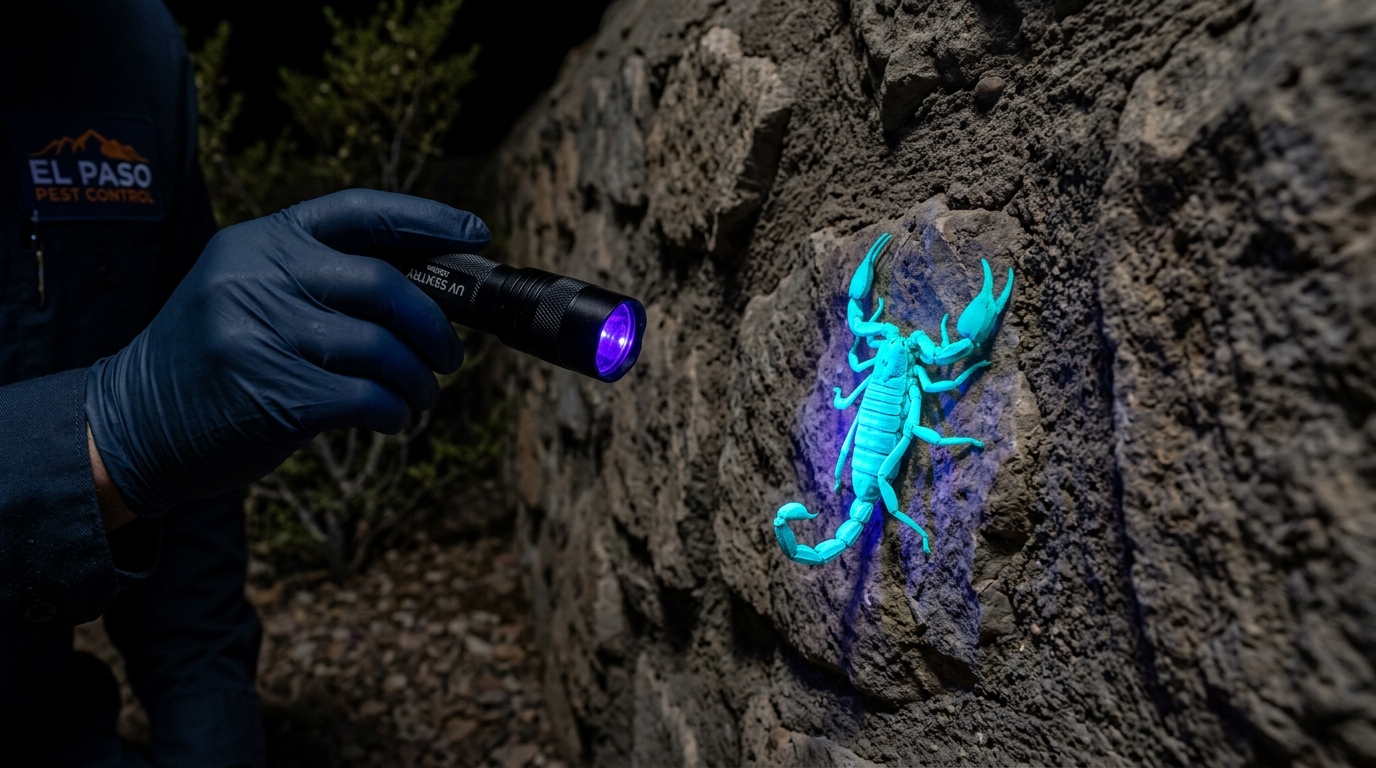
Why Bark Scorpions End Up in El Paso Bathrooms (And How to Stop Them)
Discover why bark scorpions love El Paso bathrooms, how they enter through plumbing voids, and the exact steps to scorpion-proof your home.
Read guide
German vs. American Cockroaches in El Paso: Identification & Eradication
Learn how to tell German cockroaches apart from American roaches in El Paso, where each species hides, and the right treatment methods for eradication.
Read guide
Desert Pack Rats & Mice: Preventing Winter Rodent Invasions in El Paso
Why desert pack rats and house mice move into El Paso attics and garages every fall and winter, and how exclusion sealing protects your property.
Read guide